Mary Whitehouse's Theory / Presentations 1& 2
I
Unit: Mary Whitehouse
Theme: Theory
Introduction
Authentic Movement, developed by
Mary Starks Whitehouse, incorporates movement to promote
self-exploration and improved mental health. This innovative type of
therapy can be used by dance movement therapists with individuals, couples
or in group therapy sessions. Authentic Movement is believed to be
especially beneficial for those who have difficulty processing their
issues verbally through traditional forms of therapy such as talk
therapy.
II
Learning Objectives
- Understand Mary Whitehouse's authentic movement theory
- Explain how authentic movement differs from other forms of therapy
- Gain an awareness of the importance of authentic movement therapy
- Experience the creation of one's own individual journey using authentic movement style
III
Check In
IV
Main Lesson
1
Presentations
Group 1
Katherine, Sammy, Valeria, Ella
Group 2
Angelina, Lara, Tori, Mabel, Mel
2
READING
Go to the link above and scrawl down to page 70.
Skim through from pages 70 -77
TEXTBOOK LINK:
Go to the link above and scrawl down to page 70.
Skim through from pages 70 -77
Questions 1 & 2
1. Please summarize the main aspects of Whitehouse's Theory.
2. Please, explain what she meant by "authentic movement"?
1. Please summarize the main aspects of Whitehouse's Theory.
2. Please, explain what she meant by "authentic movement"?
3
Whitehouse's Approach to Dance and Movement Therapy
- Kinesthetic Awareness: the individual's ability to make a subjective connection with how it feels to move in a certain way. Whitehouse thought of the body as the subject/organism which personally reacts and responds to everything that happens.
- Polarity: Whitehouse believed, along the lines of Jungian thought, that polarity is present in all aspects of life and emotions. Whitehouse said that physically applied, no action can be accomplished without two sets of muscles, one contracting and one extending. She thought this polarity was inherent in movement patterns and put emphasis on how it affected the body and the mind, as polarized drives emerged during the dance and movement therapy processes. However, she stressed that nothing is black and white in life, and that while we may be forced to use one form of expression over another, the one not chosen for conscious expression does not go away; it simply goes unrecognized. Moreover, in its disguised and unconscious state, it continues to exert pressure and create conflict. Given that dance inherently engages opposites, a dancer does not stop to think of curve/straight, close/open, narrow/wide, up/down, heavy/light movements. Instead, the dancer engages in polarized expression. Hence, the modality of dance and movement, as therapy, are perfect for the spontaneous release of opposing drives.
- Active Imagination: A Jungian method of freeing one's associations to allow in all levels of conscious and unconscious experience, active imagination was applied by Whitehouse in the dance/movement therapy process. In the same way that following the visual image is active imagination in fantasy. For Whitehouse, active imagination in movement was the inner sensation that allowed the impulse to take the form of physical action. It is in this process that the most dramatic psycho-physical connections are made available to consciousness. This allows the psycho-analytic practice of releasing unconscious repressed material through the process of loosening and relaxing the ego's defenses against spontaneous expression.Whitehouse also supports Jung's concept of the personal unconscious being united with an unconscious that extends beyond the personal self to a universal or collective unconscious. On the other hand, she points out the conscious self as the ego that observes and participates, but does not censor or control the individual's physical expressions. She describes the process of building the powers of the observing ego through the mechanism of freeing associations by way of body movements. In summary, she describes a spiritual process of expressing universal forms which would not normally be part of one's conscious movement repertoire. Active imagination can be experienced as long as it is expressed on a level of movement that is not consciously directed and this level of movement is what Whitehouse called "authentic movement."
- Authentic Movement: According to Whitehouse's direct quote, "at the core of the movement experience is the sensation of moving (I move) and being moved (I am moved). Ideally both are present in the same instant and it may be literally an instant. It is a moment of total awareness, the coming together of what I am doing (I move) and what is happening to me (I am moved). It cannot be anticipated, explained, specifically worked for, nor repeated exactly. The antithesis of authentic movement (I am moved), which is one of the polarities, is invisible movement (I move) or movement that is controlled and fails to express underlying (authentic/active imagination) emotions and thoughts. Authentic movement is to "I am moved" what invisible movement is to "I move." Whitehouse's aim was not to guide clients to one extreme end of the movement continuum, but to help them find a point along the continuum or even transcend it by having the client experience both, "I move" and "I am moved" simultaneously.
- Therapeutic Relationship/Intuition: Whitehouse put emphasis on the therapeutic relationship between the therapist and the client added to the therapist's intuition. Her approach to the therapeutic relationship was first to trust her own intuition to then help the client develop his/her own intuition. Finally, she emphasized the therapist's ability to begin at the level of readiness that the client presented. By this she meant that the therapist has to be ready to be anonymous in favor of observing quickly and without barriers, what is available to that individual.
4
Methodology
Whitehouse's intervention style, similar to the other pioneers in the field was directly/externally prompted, non-directive/internally prompted or a combination of both. This depended on the clients' readiness and needs. The quality of the therapeutic relationship influenced the degree to which the therapeutic movement process would take place successfully. The role of the therapist was that of a mediator and mirror to a client whose movement needed to be observed. This would allow the client to let go, close his/her eyes and just move.
V
A Note to Remember
Authentic Movement, rooted in Carl Jung's concept of active imagination
was developed in the 1950s by dance therapist Mary Starks Whitehouse.
First named “movement in depth,” Authentic Movement got its start
through Whitehouse's expressive movement work with the people she
treated early in her psychotherapy career. She believed that the therapist was at different times a teacher, a mediator, a teacher.
VI
Case Study
Being Moved - Authentic Movement - Dance Workshop Interview with Lindsay Sworski
Question 3
Write your reflection about this interview.
Activity
Students will go back to their hero's journey and work in pairs to create a common narrative in movement.
VIII
Glossary
Mary Wigman (1886 - 1973): She was a German dancer and choreographer, notable
as the pioneer of expressionist dance, dance therapy, and movement
training without pointe shoes. A student of Rudolph Laban, although the two later split over differing ideas on the meaning of dance, she is considered one of the most
important figures in the history of modern dance. Whitehouse was most strongly influenced by Wigman in the modality of dance-movement-improvisation.

psychic probing: it means to get information from clients/patients, revealing
information that they are themselves not consciously aware of.
movement-in-depth: created by Whitehouse, it means to delve unselfconsciously into the deeper layers of one's own personality through in-depth spontaneous movement expression that cannot not be reproduced or repeated. Due to her exposure to Jungian psychoanalysis and Wigman's dance-movement-improvisation, Whitehouse developed a unique theoretical and practical approach to dance and movement therapy.
Jungian psychoanalysis: it is an in-depth, analytical form of
talk therapy designed to bring together the conscious and unconscious
parts of the mind to help a person feel balanced and whole. Jungian
therapy calls for clients to look at the “real” self rather than the
self they present to the outside world.
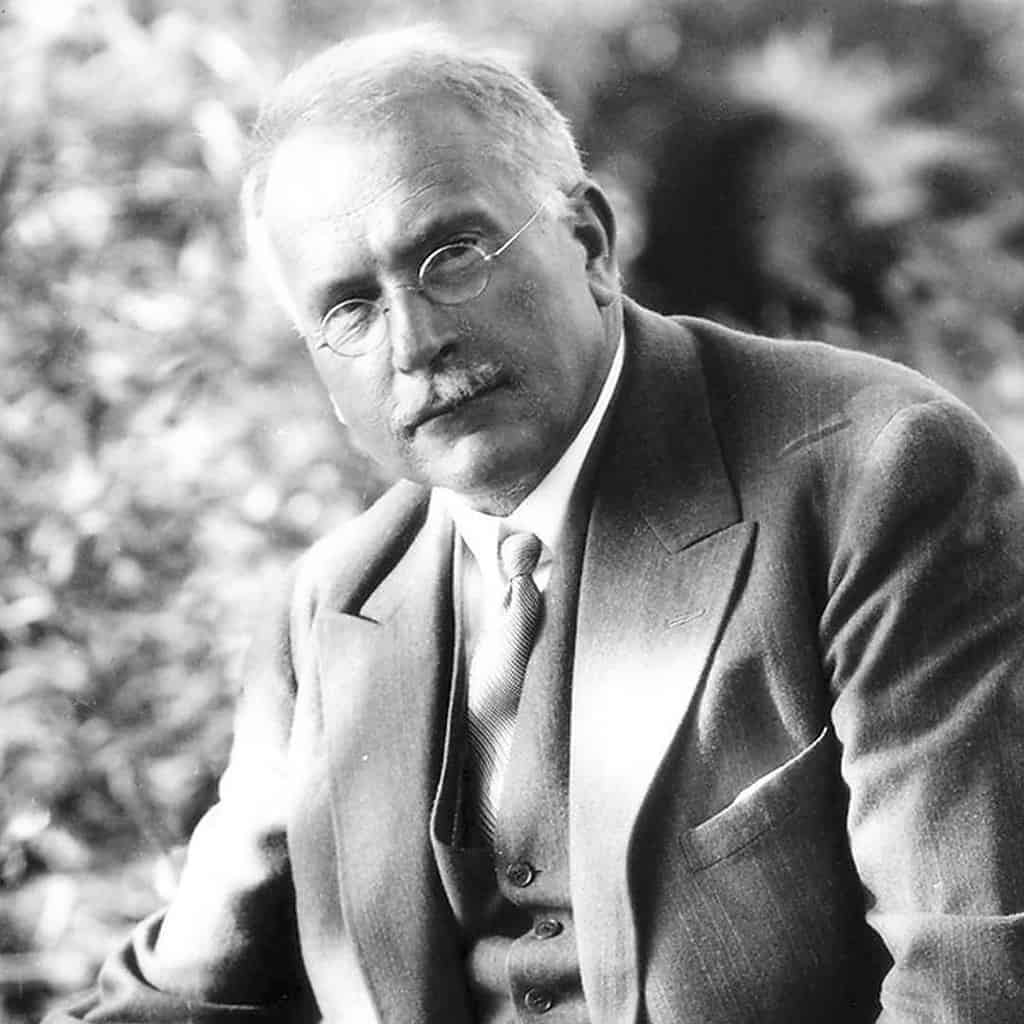
Carl Gustav Jung (1875 - 1961): He was a Swiss psychiatrist active in the early 20th century. Jung was Sigmund Freud's chosen protege, although the two later split over differing ideas on the subconscious.
Along with Freud, Jung is one of the most famous people in the history
of psychology. His ideas have influenced many of today’s therapy types,
as well as the fields of art, film, music, and culture more generally.
The concepts of “introversion” and “extroversion” come from Jung, as does the idea of having a “complex.”
IX
Journaling
X
Sources
Authentic Movement. https://www.goodtherapy.org/learn-about-therapy/types/authentic-movement
Jungian Therapy. Psychology Today. https://www.psychologytoday.com/us/therapy-types/jungian-therapy
Carl Gustav Jung: A Short Biography.
https://chmc-dubai.com/articles/carl-gustav-jung-a-short-introduction/
XI
Students' Work


Comments
Post a Comment